
What Emergency Tree Service Covers
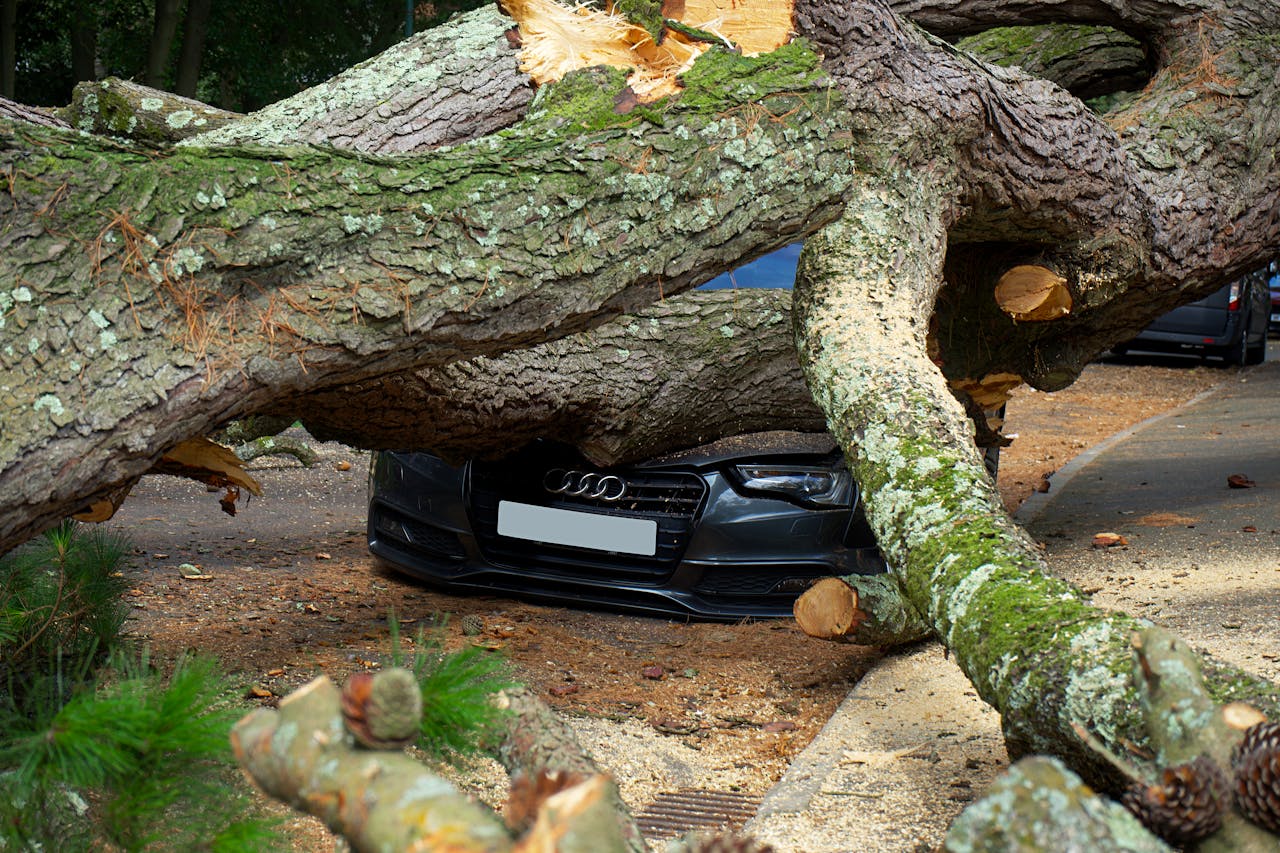
Storm damage tree removal in Irvington typically involves one of several scenarios: a tree or major limb has come down on a structure, vehicle, or utility line; a tree has uprooted or fractured at the base and is actively leaning; or hanging limbs are suspended in the canopy — what arborists call widow-makers — that could drop without warning.
Our emergency response begins with a hazard assessment. Before we cut anything, we identify what the tree is resting on, whether any utility lines are involved, and what the safest sequence of cuts will be. Trees under tension behave unpredictably when cut; missing that assessment is how injuries happen.
Once the hazard is neutralized — meaning the immediate danger to people and structures is removed — we discuss the cleanup scope with you. In some cases the priority is getting a vehicle out of a driveway or tarping a damaged roof section before weather moves in. We work in the order that makes the most sense for your situation, not a fixed sequence.
Debris removal and site cleanup are included in every emergency job. We do not leave wood piles in your yard. Logs are cut to manageable lengths and either hauled away or left stacked if you want firewood. Brush is chipped on-site or removed. The goal is to leave your property safe and accessible before we leave.
When to Call for Emergency Tree Service
- A tree or large limb has fallen on your roof, fence, vehicle, or other structure
- A tree is actively leaning toward your house after a storm and was not leaning before
- Hanging broken limbs are suspended in the canopy over walkways, play areas, or parked cars
- A tree has come down across your driveway and you cannot get in or out
- A tree has fallen near or on a utility line — call your utility first, then us
- A trunk has split at a major fork and one half is still partially attached
When to Wait for a Regular Appointment
Not every tree problem after a storm is a true emergency. If a tree is leaning but has been leaning for years and nothing is directly underneath it, the risk is lower than it looks. If small branches are down in the yard but no structures or vehicles are threatened, cleanup can usually wait for a scheduled visit at standard rates. **Emergency response costs more** — typically 50 to 100 percent above standard rates — because it requires immediate dispatch, often outside normal hours. We will tell you honestly over the phone whether the situation sounds like a true emergency or something that can safely wait.
What Affects the Cost
Time of response
Night, weekend, and holiday calls carry a premium over daytime weekday rates. The premium reflects the real cost of pulling a crew away from other commitments.
Structural involvement
Trees resting on roofs, vehicles, or other structures require more careful rigging and slower work to avoid additional damage. This adds time and cost.
Utility proximity
If the tree is near power lines, we coordinate with the utility company before cutting. Work may need to be staged around their schedule.
Volume of debris
Larger trees generate more material to chip or haul. The size and species of the tree affects how long cleanup takes.
Access to the site
If equipment cannot get close because of fencing, parked vehicles, or soft ground, the job takes longer. Difficult access increases labor cost.
Service Area
We provide tree services in Irvington, NJ. Call to confirm availability in your area.